






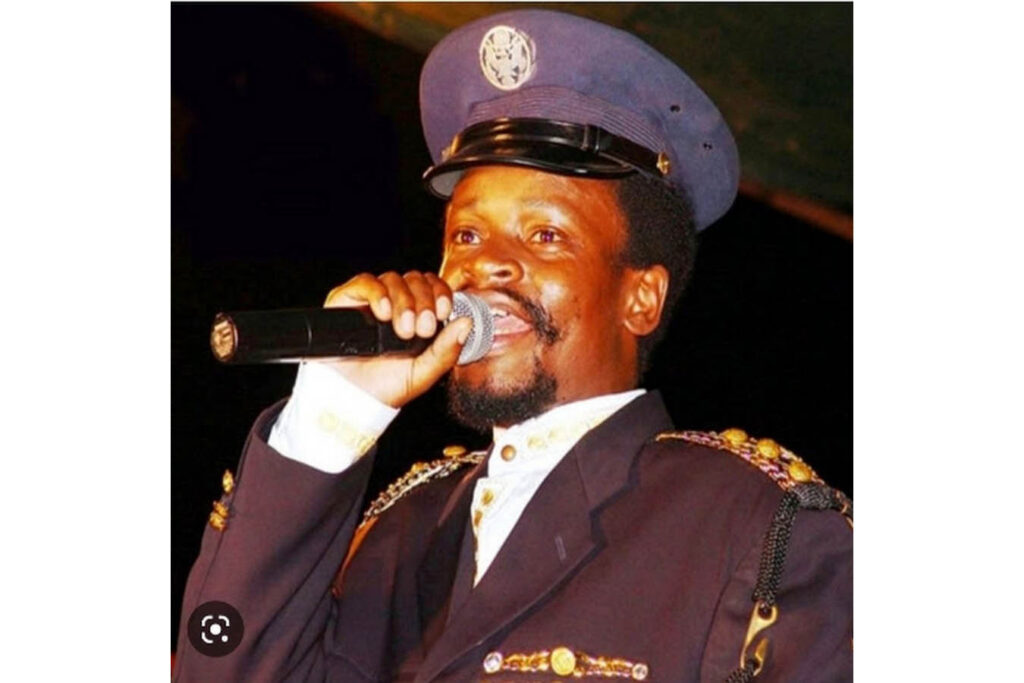
More than two decades after the death of legendary Ugandan musician Prince Job Paul Kafeero, a long-standing family mystery that has lingered for years may finally be edging toward resolution.
The remains of the celebrated Kadongo Kamu icon were exhumed on Monday as part of a court-sanctioned process aimed at settling a paternity dispute involving more than 20 individuals who claim to be his biological children.
The development was announced by Balaam Barugahara, who described the exercise as a major breakthrough in a matter that has divided sections of Kafeero’s family for over two decades.
“As I prepare to hand over the Youth and Children Affairs docket soon, I wish to inform the public that the long-standing paternity dispute involving over 20 young people allegedly fathered by my friend, the late Prince Paul Kafeero, will soon be resolved,” Balaam said.
For years, uncertainty surrounding Kafeero’s biological children has remained a source of speculation, emotional strain, and disagreement among family members. Several individuals have over time come forward claiming to be related to the late singer, but without scientific proof, the matter remained unresolved.
Now, forensic science could finally provide answers to questions that have persisted for years.
According to Balaam, a team of pathologists led by Assistant Inspector General of Police Dr. Moses Byaruhanga conducted the exhumation and collected samples in accordance with court directives and established forensic procedures.
The samples are expected to undergo DNA testing at the Government Analytical Laboratory and the Uganda Police Forensic Laboratory, where experts will determine whether any of the claimants are biologically related to the late musician.
The development marks a rare intersection of music history, family legacy, and forensic science.
While Kafeero’s contribution to Uganda’s music industry remains undisputed, questions surrounding who carries his bloodline have continued to cast a shadow over one of the most sensitive issues tied to his legacy and estate.
Balaam, who said he facilitated the exercise, thanked the courts, family members, forensic experts, and the Uganda Police Force for supporting the process.
He expressed optimism that the DNA findings will not only establish the facts but also bring long-awaited closure to a dispute that has endured for more than 20 years.
Quoting Luke 12:2, Balaam said: “There is nothing concealed that will not be disclosed, or hidden that will not be made known.”
For a family long divided by uncertainty, the next chapter may finally bring answers.